Review: Crafting Tools Line Art for Embroidery
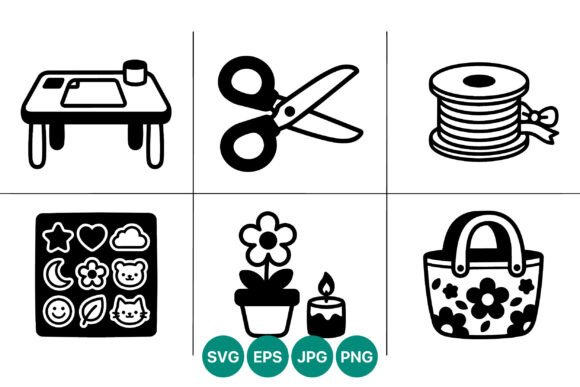
As a designer who spends half my life digitizing and the other half stitching, I have learned that not every graphic translates well to thread. When I first pulled up Crafting Tools Line Art Black and White, my initial reaction was one of cautious optimism. In the world of Illustrations and Graphics, clean lines are easy to find. However, finding line art that respects the physical limitations of an embroidery machine is a different story entirely. This collection features iconic crafting symbols: scissors, a spool of thread with a bow, a workspace table, a flower pot with a candle, a sticker sheet, and a floral tote bag. The download comes as a ZIP file, which is standard, but the real question is how these elements perform when put under the needle.
First Impressions and Visual Personality
The aesthetic here is minimalist and modern. There is no clutter, no unnecessary shading, and no complex gradients that would require thousands of color changes or dense fill stitches. For an embroidery designer, this is a relief. The black and white nature of the source art suggests a high-contrast approach, which is ideal for creating crisp, readable designs on various fabrics. The mood is cozy yet professional, evoking the quiet satisfaction of a well-organized craft room. It feels less like a loud statement piece and more like a subtle nod to the creative process. This visual personality makes it versatile. It does not scream for attention; instead, it invites a closer look, which is exactly what you want for high-end handmade goods.
Real-World Application: The Custom Tote Bag Scenario
To truly evaluate Crafting Tools Line Art Black and White, I imagined a specific client project. A local boutique owner wanted a run of canvas tote bags for her upcoming spring workshop series. She needed something that looked artisanal but not childish. I selected the floral tote bag icon and the scissors from this collection. Because these are line art elements, they lend themselves beautifully to a running stitch or a light satin stitch outline.
On a heavy cotton canvas, the design held up remarkably well. The lack of dense fill stitch areas meant the fabric did not pucker, a common issue with heavier materials. The scissors icon, with its distinct handles and blades, provided enough negative space to remain clear even at a moderate size. The spool of thread with the bow added a touch of whimsy without overwhelming the composition. Customers at the shop immediately connected with the imagery because it mirrored their own hobbies. It was not just a logo; it was a reflection of their identity as makers. This kind of emotional connection drives sales for any Etsy seller or small shop owner.
Versatility Across Product Lines
Beyond tote bags, this set of design assets shows promise across a wide range of embroidery projects. For custom apparel, such as a crewneck sweatshirt, the workspace table or the flower pot with a candle could serve as a charming left-chest emblem. The simplicity ensures that the design does not become stiff or board-like on soft fleece. For baby embroidery, the softer elements like the flower pot could be scaled down for a onesie or a burp cloth, provided the stitch density is adjusted to keep the fabric gentle against sensitive skin.
I also see potential for embroidered patches. The distinct shapes of the sticker sheet and the scissors are self-contained, making them ideal for cut-out appliques or merrowed-edge patches. In the realm of home decor, these icons would look delightful on kitchen tea towels or pillow covers, adding a personalized touch to holiday gifts or housewarming presents. For digital product sellers, these graphics can be used in printable mockups to showcase other products, creating a cohesive brand aesthetic that appeals to creative entrepreneurs.
Technical Considerations and Limitations
While the aesthetic is strong, practical application requires vigilance. Line art can be deceptive. What looks like a thin, elegant line on a screen can become a fragile thread path on fabric. If you are working with a digital embroidery file derived from this art, you must check the stitch density. Too light, and the threads may snag or break during washing. Too dense, and you lose the delicate "line" feel, turning it into a solid block.
Special care is needed when stitching on textured fabrics or stretchy materials. On a ribbed knit cap, for instance, the fine details of the scissors’ hinges might get lost in the fabric’s texture. Similarly, on dark fabrics, ensure your thread colors provide sufficient contrast. A black thread on a navy shirt will vanish. Always test on scrap fabric first. This is non-negotiable for professional results. Check how the stabilizer interacts with the fabric. For lightweight linens, a cut-away stabilizer might be necessary to prevent distortion, whereas a tear-away might suffice for stable cottons.
Another critical factor is hoop size. If you attempt to shrink these designs too much for a tiny 4x4 hoop, the details will merge. The bow on the spool of thread, for example, needs enough room to breathe. If the elements are too close together, the threads will bridge gaps, creating a messy, indistinct blob. Always confirm the minimum recommended size before starting a production run.
Enhancing Brand Value and Customer Trust
Using high-quality, coherent graphics like Crafting Tools Line Art Black and White elevates the perceived value of your finished product. In a market saturated with generic clipart, a well-executed embroidery design signals professionalism. It tells the buyer that care was taken in every step, from design selection to stitching. This builds trust. For commercial embroidery projects, consistency is key. Using a unified set of icons helps establish brand recognition. Whether it is a logo on an apron for a craft fair vendor or a decorative element on a boutique’s packaging, these visuals contribute to a polished brand identity.
Moreover, the "handmade" appeal is strengthened by designs that acknowledge the medium. These icons celebrate the tools of the trade, creating a meta-narrative that resonates with buyers who appreciate craftsmanship. It is not just a decoration; it is a conversation starter. This engagement can lead to higher customer retention and word-of-mouth referrals, which are vital for any craft business.
Practical Notes for the Embroidery Designer
Before you commit to using this collection in a client project or for your own small shop product line, take these steps:
- Verify File Formats: The description mentions a ZIP folder, but it does not specify the included embroidery formats (PES, DST, JEF, etc.). Ensure the files are compatible with your machine before purchase.
- Check Licensing: Confirm whether the license allows for commercial use of the finished items. Some graphic licenses differ from embroidery file licenses.
- Test Stitch Density: Run a test stitch-out on the actual fabric you plan to use. Adjust tension and density if the lines appear too thin or too bulky.
- Contrast Check: View your design in black and white mockups to ensure readability regardless of thread color choices.
- Detail Inspection: Zoom in on the smallest elements, like the candle flame or the scissor pivot. Ensure they are large enough to stitch cleanly without breaking needles.
In conclusion, Crafting Tools Line Art Black and White is a promising resource for designers who value clarity and thematic relevance. It is not just a set of images; it is a toolkit for creating meaningful connections with customers through personalized gifts and custom apparel. With careful technical preparation and an eye for detail, these graphics can translate into beautiful, durable, and commercially successful embroidery work. Just remember: the screen is not the fabric. Test, adjust, and stitch with intention.