Reviewing Pet Grooming Sticker Pack for Embroidery
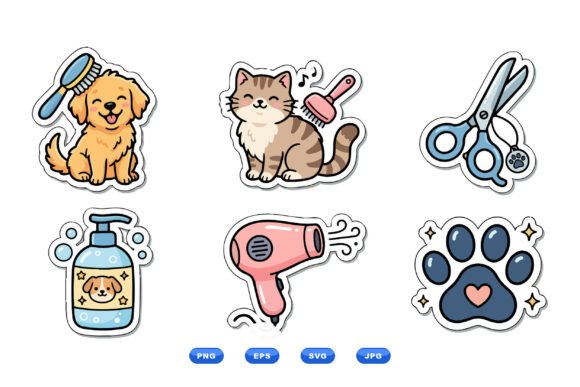
As a designer who spends half my life digitizing and the other half staring at hoop tensions, I have learned that not every cute graphic translates well to thread. We often get swept up in the visual appeal of digital assets, forgetting the physical reality of needle penetration and fabric distortion. Recently, I pulled the Pet Grooming Sticker Pack from my library to evaluate its potential for a client’s new line of pet salon merchandise. This collection, described as a kawaii outlined vector set featuring dog and cat grooming tools like scissors, shampoo, brushes, and dryers, promised a vibrant aesthetic. But does it hold up under the needle? Here is my practical breakdown of using these graphics for real-world embroidery projects.
First Impressions: Mood and Visual Personality
The immediate vibe of the Pet Grooming Sticker Pack is playful and approachable. The "kawaii" style—characterized by rounded edges, simplified shapes, and expressive outlines—is inherently friendly. For a pet grooming business, this is gold. It softens the image of sharp scissors and loud dryers, making them feel safe and welcoming. From a design perspective, the outlined nature of these vectors suggests a clean, modern look. However, as an embroiderer, my first thought was not about the cuteness, but about the line weight. Outlined designs can be tricky. If the lines are too thin, they disappear into the fabric texture. If they are too thick, they become dense blocks of thread that pull the garment out of shape.
I reviewed the files assuming they would need some digitizing adjustment. While the product falls under Illustrations and Graphics, translating them into a functional machine embroidery design requires careful attention to stitch types. The simplicity of the icons—scissors, shampoo bottles, brushes—means there is little room for error. Each element must be distinct. The vibrant color palette suggested in the description works well for social media art, but for stitching, I had to consider how these colors would interact with common apparel fabrics.
Real-World Application: The Custom Tote Bag Test
To test the viability of the Pet Grooming Sticker Pack, I simulated a project for a local mobile groomer. She wanted branded tote bag design options for her clients to carry pet supplies. I selected the shampoo and brush icons to create a clustered composition. This scenario is typical for Etsy sellers and craft business owners who need to turn digital assets into tangible handmade products.
On a heavy canvas tote, the design performed admirably. The bold outlines of the grooming tools stood out against the textured fabric. I used a combination of satin stitch for the borders and a light fill stitch for the interior details of the shampoo bottle. The result was crisp. The kawaii aesthetic translated well because the simplified shapes did not require excessive detail that might get lost in the weave of the canvas. This experience highlighted that the pack is best suited for items where you have a bit of surface area to work with, allowing the icons to breathe.
For custom apparel like sweatshirts, the Pet Grooming Sticker Pack offers great versatility. A single icon, such as the dryer or the scissors, works perfectly as a left-chest logo on a staff uniform. It is professional yet playful. For sweatshirt embroidery, I recommend increasing the stitch density slightly to ensure the design pops against the fuzzy texture of fleece or cotton blends. The vibrant colors mentioned in the product description help here, providing necessary contrast against neutral garment colors like navy, grey, or black.
Navigating Technical Challenges
While the designs are charming, they are not without their pitfalls. Embroidery is a medium of constraints. When working with the Pet Grooming Sticker Pack, you must be mindful of hoop size and detail level. These icons are small by nature. If you attempt to stitch them at a very small scale, say under two inches, the fine details of the scissor handles or the bristles on the brush may merge. This is especially true if you are using a lower-quality thread or an older machine.
Fabric texture plays a massive role here. On smooth fabrics like broadcloth or polyester blends, the outlined vectors will look sharp and defined. However, on textured fabrics like terry cloth towels or waffle-weave aprons, the thin lines might get swallowed. In these cases, I advise using a heavier weight thread or adding a subtle backing fill to lift the design off the fabric. For stretchy fabric like jersey t-shirts, proper stabilization is non-negotiable. Without a cut-away stabilizer, the pulling force of the satin stitches around the curved edges of the shampoo bottles could cause puckering.
Another consideration is the stitch density. Since these are outlined vectors, there is a risk of creating "ladders" or long jumps if the digitizing is not optimized. If you are converting these graphics yourself, ensure that the travel stitches are hidden within the design elements. For those downloading pre-digitized files, always check the preview. If the stitch count seems unusually high for such simple shapes, it might indicate inefficient pathing, which increases production time and thread usage.
Commercial Viability and Brand Consistency
For small shop product creators, consistency is key. The Pet Grooming Sticker Pack provides a cohesive visual language. Using the same style of icons across different products—such as embroidered patches, caps, and kitchen towels—builds brand recognition. A patch featuring the kawaii scissors can be sold as a standalone accessory, while the same icon on an apron reinforces the professional identity of a groomer.
When creating personalized gift items, such as a baby onesie with a small cat brush icon, the softness of the design is a major selling point. Parents appreciate the gentle, non-aggressive imagery. However, for baby embroidery, comfort is paramount. Ensure that the back of the stitching is smooth and that no scratchy stabilizer remnants are left behind. Using a soft tear-away stabilizer and trimming threads closely is essential for items that will touch sensitive skin.
From a marketing standpoint, these graphics are excellent for printable mockup creation. Before stitching a single thread, you can place these vectors on digital templates of shirts and bags to gauge customer interest. This saves time and materials. As design assets, they bridge the gap between digital branding and physical products. Whether you are an Etsy seller looking to expand your catalog or a boutique owner creating exclusive merchandise, the versatility of these icons allows for diverse product lines.
Practical Designer Notes for Best Results
Before you commit to a large run of commercial embroidery projects using the Pet Grooming Sticker Pack, follow these practical steps:
- Test on Scrap Fabric: Always stitch a sample on the exact fabric you plan to use. Thread tension and fabric behavior vary widely.
- Check Thread Color Contrast: Vibrant colors look great on screen, but ensure they have enough contrast against your garment. Dark threads on dark fabrics will vanish.
- Review Stitch Density: If digitizing yourself, keep the density moderate. Too dense, and the fabric puckers; too light, and the fabric shows through.
- Confirm Hoop Size: Ensure your hoop can accommodate the full design without re-hooping, which can cause alignment issues.
- Inspect Small Details: Zoom in on the digital file. Are the corners of the scissors sharp? Will the needle pierce the same hole twice, causing breakage?
- Test in Black and White: Convert your mockup to grayscale. If the design loses its definition without color, it relies too much on hue rather than shape.
- Use Proper Stabilizer: Match the stabilizer to the fabric. Cut-away for knits, tear-away for wovens.
- Verify Licensing: Before selling finished items or digital products, confirm the license terms of the digital embroidery file or graphic pack. Commercial rights vary by creator.
In conclusion, the Pet Grooming Sticker Pack is a strong contender for pet-related embroidery projects. Its kawaii style appeals to a broad audience, and its simple shapes are generally forgiving for stitchers. However, success depends on thoughtful adaptation to the physical medium. By respecting the limitations of fabric and thread, and by testing rigorously, you can transform these vibrant graphics into high-quality, profitable finished products. Whether for a holiday embroidery gift or a year-round small business merchandise line, these tools offer a playful yet professional edge.