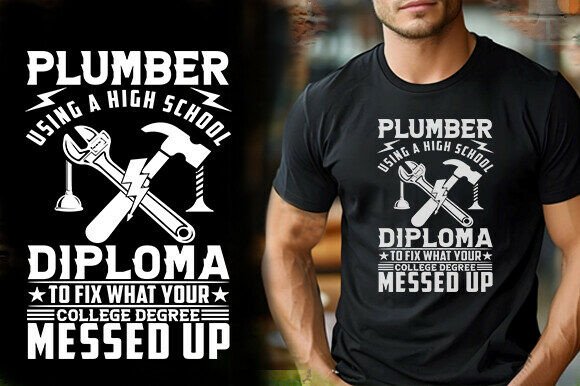
Plumber Using a High School Diploma to F: A Designer’s Review
As an embroidery designer who has spent years digitizing for both high-volume commercial clients and small-batch Etsy sellers, I approach every new machine embroidery design with a critical eye. It is not just about whether the image looks cute on a screen; it is about how those pixels translate into thread, tension, and texture on actual fabric. Recently, I evaluated the PLUMBER USING a HIGH SCHOOL DIPLOMA to F graphic to determine its viability for real-world stitching projects. This review breaks down the practical application of this design, moving beyond simple aesthetics to discuss stitch behavior, fabric compatibility, and market potential for craft business owners.
First Impressions and Visual Personality
The initial impact of PLUMBER USING a HIGH SCHOOL DIPLOMA to F is rooted in its humorous, relatable narrative. For those in the trades or those who appreciate blue-collar humor, the concept strikes a chord. Visually, the design leans into a bold, graphic style typical of modern T-Shirt Designs. From a digitizer’s perspective, this is both a blessing and a challenge. Bold lines usually translate well to embroidery because they allow for clean satin stitch borders and solid fill stitch areas without excessive micro-detailing that can cause thread breaks.
The mood is playful yet professional enough for casual wear. It does not scream "novelty gift" in a cheap way; rather, it feels like something a proud plumber might wear to a union meeting or a family barbecue. The layout appears balanced, which is crucial when considering how the design will sit on a curved surface like a chest pocket or the front of a cap. When evaluating Graphics for embroidery, I always look for clear separation between elements. In this case, the distinction between the character, the diploma, and any accompanying text seems distinct, which helps maintain clarity once the needle hits the fabric.
Real-World Application: The Sweatshirt Test
To truly understand the value of an embroidery file, you must imagine it on a specific product. I visualized PLUMBER USING a HIGH SCHOOL DIPLOMA to F stitched onto a heavyweight cotton blend sweatshirt. This is a popular item for custom apparel shops and small shop products. On a sweatshirt, the loft of the fabric provides a nice cushion for the stitches, making the design pop.
In this scenario, the design serves as a centerpiece. If I were producing this for a client, I would recommend placing it on the left chest for a subtle look or centered on the back for a statement piece. The humor resonates well in social settings, making it an excellent choice for personalized gifts for Father’s Day, birthdays, or retirement parties. For an Etsy seller, this type of niche-specific humor often converts better than generic phrases because it targets a specific community with shared experiences.
However, the transition from a digital T-Shirt Design to thread requires careful consideration of scale. What looks sharp on a monitor can become a dense blob if scaled down too far. I advise testing the design at various sizes to ensure the finer details, such as the text on the diploma or facial features, do not merge into a single mass of thread. This is particularly important if you are aiming for a finished product that looks professional rather than homemade.
Fabric Considerations and Stitch Density
One of the most critical aspects of using any new digital embroidery file is understanding how it interacts with different materials. PLUMBER USING a HIGH SCHOOL DIPLOMA to F likely contains areas of solid color that require significant stitch coverage. On thin or stretchy fabrics, such as a lightweight tri-blend tee or a polyester performance shirt, this density can cause puckering.
To mitigate this, proper stabilization is non-negotiable. I strongly recommend using a cut-away stabilizer for garments that will be washed frequently, as it provides ongoing support to the stitches. For woven fabrics like canvas tote bags or aprons, a tear-away stabilizer might suffice, but the weight of the design should still be considered. If the stitch density is too high for a lightweight tote bag design, the fabric may distort, ruining the aesthetic of the handmade product.
Dark fabrics present another challenge. If the design includes light colors, you must account for underlay stitches to prevent the background fabric from showing through. Conversely, if you are stitching on dark navy or black workwear, ensure your thread colors have enough contrast to make the design readable. A lack of contrast can render the humorous element invisible, defeating the purpose of the purchase.
Navigating Technical Constraints
While the design is appealing, there are areas where caution is needed. Curved surfaces, such as baseball caps, require precise positioning. If PLUMBER USING a HIGH SCHOOL DIPLOMA to F is too wide, it may wrap around the curve of the cap, distorting the image. Always check the dimensions against your hoop size before committing to a project. Additionally, tiny lettering within the design—if present—may need simplification. Embroidery machines struggle with very small text, often resulting in illegible blobs. If the original graphic relies on small print for the joke, consider whether the embroidery project can accommodate that level of detail or if a simplified version is necessary.
For those creating embroidered patches, this design could work well if backed with a sturdy twill. Patches allow for higher stitch densities without worrying about garment distortion, making them ideal for complex Graphics. However, remember that patches add bulk, so they are best suited for jackets or bags rather than delicate items.
Commercial Viability and Brand Consistency
For craft business owners and commercial embroidery providers, the licensing terms of PLUMBER USING a HIGH SCHOOL DIPLOMA to F are paramount. The product description mentions experience with Amazon and custom merch, suggesting the creator understands commercial needs. However, never assume. Always verify whether the design assets come with a commercial use license. Selling finished items like holiday embroidery gifts or baby embroidery onesies without proper rights can lead to legal issues.
From a branding perspective, this design fits well with businesses that focus on trade-specific merchandise. It adds personality to a catalog that might otherwise feel sterile. When creating printable mockups for your online store, ensure the digital representation accurately reflects the texture of the stitches. Customers appreciate transparency; showing a close-up of the actual stitching builds trust and reduces return rates.
Practical Designer Notes for Success
Before running this design on a customer’s garment, follow these steps to ensure quality:
- Test on Scrap Fabric: Always stitch out the design on a similar fabric to check for tension issues and registration accuracy.
- Check Thread Contrast: Verify that your chosen thread colors stand out against the fabric, especially for key details.
- Review Stitch Density: If the design feels too stiff after stitching, consider reducing the density in your editing software if you have the skills, or choose a heavier fabric.
- Confirm Hoop Size: Ensure the design fits comfortably within your hoop with adequate margin for clamping.
- Inspect Small Details: Zoom in on the digitized file to check for unnecessary jump stitches or overly complex paths that could slow down production.
- Verify Licensing: Confirm that you are allowed to sell finished products featuring this machine embroidery design.
In conclusion, PLUMBER USING a HIGH SCHOOL DIPLOMA to F offers a strong potential for engaging, niche-specific merchandise. With careful attention to fabric choice, stabilization, and sizing, it can become a standout item in any small shop product line. By treating the design with the technical respect it deserves, you can transform a simple graphic into a high-quality, durable, and beloved personalized gift.