Reviewing That’s What I Do: A Designer’s Take
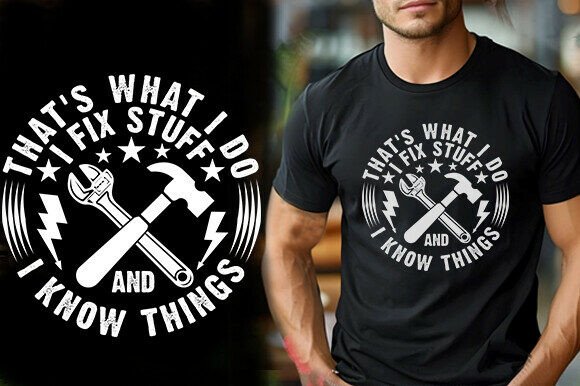
As an embroidery designer who has spent years digitizing and testing thousands of files, I have learned that a design’s success is not just about how it looks on a screen. It is about how it behaves under the needle. When I first pulled up THAT S WHAT I DO I FIX STUFF and I KNOW, my initial reaction was one of cautious optimism. The phrase itself carries a bold, humorous confidence that appeals to a specific demographic—tradespeople, DIY enthusiasts, and proud handymen. But as a reviewer, I had to look past the witty copy and evaluate the structural integrity of the graphics for real-world application.
This piece falls squarely into the category of T-Shirt Designs and general Graphics, but its utility extends far beyond a simple tee. In this review, I am breaking down how this design performs when translated from a digital concept into a tangible machine embroidery design. Whether you are an Etsy seller looking for your next bestseller or a hobbyist making a personalized gift for a spouse, understanding the nuances of this file is crucial before you hit start on your machine.
First Impressions and Visual Personality
The mood of THAT S WHAT I DO I FIX STUFF and I KNOW is unapologetically masculine and straightforward. It does not rely on intricate floral motifs or delicate shading. Instead, it leans into strong typography and clear lines. For an embroiderer, this is both a blessing and a challenge. Bold text is generally easier to read from a distance, which is ideal for custom apparel meant to be seen and appreciated in social settings or work environments.
However, the "know" at the end of the phrase suggests a punchline that requires precise alignment. If the lettering is too condensed, the joke gets lost in a blob of thread. If it is too spread out, it may not fit standard hoop constraints. My advice is to examine the spacing carefully. A well-digitized version of this design should utilize a mix of satin stitch for smaller text elements and potentially a fill stitch for larger, blockier letters to ensure coverage without excessive bulk.
Real-World Application: The Sweatshirt Test
To truly evaluate this design, I imagined a common scenario: creating a sweatshirt embroidery project for a client’s husband who is a plumber. This is a classic use case for this type of craft business item. The thick fabric of a sweatshirt provides an excellent base for heavier designs, allowing the threads to sit proudly on the surface without sinking in.
In this context, THAT S WHAT I DO I FIX STUFF and I KNOW shines. The humor resonates with the recipient, and the durability of embroidery ensures the message lasts through countless washes. Unlike printed T-Shirt Designs that might crack or fade, stitched graphics maintain their professional appearance. When placed on the left chest or centered on the back, the design acts as a badge of honor. It transforms a generic garment into a handmade product with personality.
For small shop product lines, this versatility is key. You can market it not just as clothing, but as part of a broader gift set. Imagine pairing the embroidered sweatshirt with a matching tote bag design or an embroidered patch for a tool bag. The consistent branding across these items builds trust and perceived value for your customers.
Navigating Technical Challenges
While the concept is strong, execution matters. There are specific scenarios where you must approach THAT S WHAT I DO I FIX STUFF and I KNOW with caution. One major consideration is hoop size. If the design includes long lines of text, it may require a 5x7 or even a 6x10 hoop. Always confirm the dimensions before purchasing or downloading the digital embroidery file. Trying to cram a wide design into a 4x4 hoop will result in distorted lettering that is difficult to read.
Another critical factor is stitch density. If the design uses heavy fill stitches on thin fabric, such as a lightweight t-shirt or a silk blend, you risk puckering. In these cases, using a proper stabilizer is non-negotiable. A cut-away stabilizer is often recommended for garments that will be washed frequently, as it provides ongoing support to the stitches. For stretchy fabrics, consider using a topping to prevent the stitches from sinking into the knit.
Additionally, pay attention to thread colors. This design likely relies on high contrast to be effective. Using dark thread on dark fabric will render the text invisible. Conversely, using bright, contrasting colors on a neutral background enhances readability. I always recommend testing the design in black and white mockups first to ensure the shape and layout hold up without the distraction of color.
Commercial Viability and Brand Consistency
For commercial embroidery professionals, this design offers a quick turnaround potential. Since it is primarily text-based, it does not require complex color changes or intricate trimming, which speeds up production time. This efficiency can improve your profit margins when selling finished product items at craft fairs or online.
However, professionalism is paramount. Before listing this as a small shop product, verify the licensing terms. The description mentions experience with Amazon and custom merch, but it does not explicitly state commercial rights. Always clarify whether the embroidery file allows for unlimited sales of physical items. Protecting your business from copyright issues is just as important as the quality of your stitching.
Furthermore, consider the target audience. This design fits well within the niche of trade professions. It can be adapted for electricians, carpenters, or mechanics with slight modifications. By creating a cohesive line of design assets around this theme, you can establish a recognizable brand identity. Customers who appreciate the humor and quality of one item are likely to return for more.
Practical Designer Notes for Success
To ensure the best results with THAT S WHAT I DO I FIX STUFF and I KNOW, follow these practical steps:
- Test on Scrap Fabric: Never run a new design directly on your final garment. Use a similar fabric scrap to check tension and registration.
- Check Stitch Density: Ensure the design is not too dense for your chosen fabric. Adjust density settings if your machine allows.
- Verify Hoop Size: Confirm that the design fits within your available hoops without resizing, which can distort stitch angles.
- Inspect Small Details: Look for tiny elements that may not stitch out cleanly. Simplify if necessary.
- Use Proper Stabilizer: Match the stabilizer to the fabric weight and type to prevent puckering and shifting.
- Confirm Licensing: Ensure you have the right to sell items made with this applique design or standard embroidery file.
In conclusion, THAT S WHAT I DO I FIX STUFF and I KNOW is a promising addition to any designer’s library. It combines humor with a clean aesthetic that translates well to embroidery. By paying attention to technical details like fabric texture, thread colors, and stabilizer choice, you can create a finished product that delights customers and stands the test of time. Whether for holiday embroidery gifts or everyday custom apparel, this design has the potential to be a staple in your portfolio.